
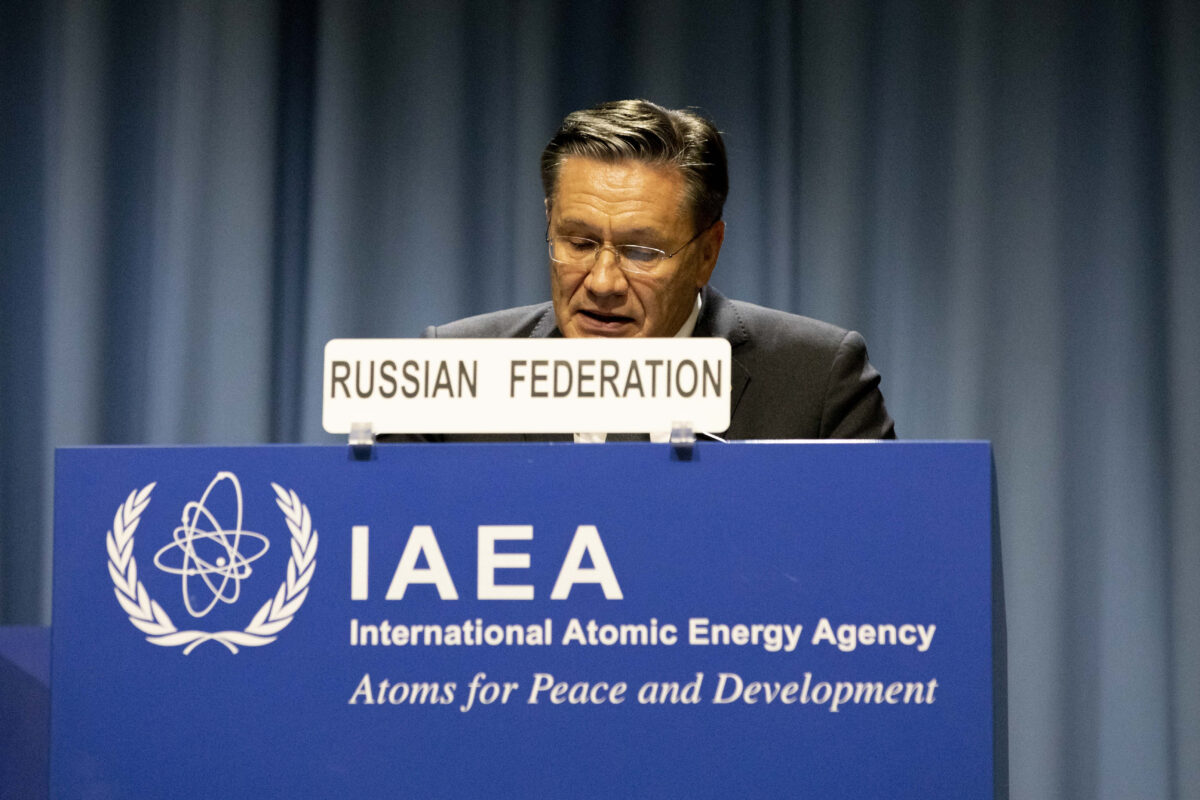
Vienna (Austria), 9 September (LaPresse/AP) – The Board of Governors of the International Atomic Energy Agency (IAEA) has referred Iran to the UN Security Council for the first time in 20 years, for failing to cooperate with a long-running investigation into traces of uranium detected by inspectors at several undeclared sites in the country. Twenty-three of the 35 member states of the IAEA Board of Governors voted in favour of the resolution at the agency’s headquarters in Vienna. China, Russia and Niger voted against, whilst eight countries abstained and one did not vote. The resolution was tabled by the United States, the United Kingdom, France and Germany. The diplomatic initiative had been under consideration since June 2025, when the IAEA Board of Governors had officially found Iran to be in non-compliance with its non-proliferation obligations, due to Tehran’s failure to cooperate with the investigation into traces of uranium at various undeclared sites in the country. Western officials suspect that the traces may provide further evidence of the existence of a secret Iranian nuclear weapons programme up until 2003. Iran maintains that it is not pursuing the development of nuclear weapons and that its programme is exclusively peaceful in nature. The referral of Iran’s case to the UN Security Council – which comes against the backdrop of a further escalation in the conflict between the United States and Tehran – now transfers responsibility to a higher authority, which is empowered to take further measures, including sanctions or the freezing of assets. However, it is unlikely that the UN will adopt specific punitive measures in this case, given that Russia and China, allies of Tehran, hold veto power within the Security Council.
Iran: IAEA refers Tehran to the UN Security Council for the first time in 20 years

Vienna (Austria), 9 September (LaPresse/AP) – The Board of Governors of the International Atomic Energy Agency (IAEA) has referred Iran to the UN Security Council for the first time in 20 years, for failing to cooperate with a long-running investigation into traces of uranium detected by inspectors at several undeclared sites in the country. Twenty-three of the 35 member states of the IAEA Board of Governors voted in favour of the resolution at the agency’s headquarters in Vienna. China, Russia and Niger voted against, whilst eight countries abstained and one did not vote. The resolution was tabled by the United States, the United Kingdom, France and Germany. The diplomatic initiative had been under consideration since June 2025, when the IAEA Board of Governors had officially found Iran to be in non-compliance with its non-proliferation obligations, due to Tehran’s failure to cooperate with the investigation into traces of uranium at various undeclared sites in the country. Western officials suspect that the traces may provide further evidence of the existence of a secret Iranian nuclear weapons programme up until 2003. Iran maintains that it is not pursuing the development of nuclear weapons and that its programme is exclusively peaceful in nature. The referral of Iran’s case to the UN Security Council – which comes against the backdrop of a further escalation in the conflict between the United States and Tehran – now transfers responsibility to a higher authority, which is empowered to take further measures, including sanctions or the freezing of assets. However, it is unlikely that the UN will adopt specific punitive measures in this case, given that Russia and China, allies of Tehran, hold veto power within the Security Council.