
Frankfurt (Germany), Aug. 25 (LaPresse) – The alleged drone attack at Leipzig/Halle Airport may have been more elaborate than has emerged so far. Ten days after the discovery of the first aircraft, investigators found a third drone and around 50 grams of Hexogen, a high-powered military explosive. According to security sources cited by German media outlets Ndr, Wdr and Sueddeutsche Zeitung, the perpetrators may have planned an attack more serious than previously believed. The third drone was found on August 14 in a field in Kabelsketal, in the Saalekreis district of Saxony-Anhalt, close to the western part of the airport. The following day, investigators reportedly found a substance at the site which, according to initial analyses, could be around 50 grams of Hexogen. The Federal Prosecutor’s Office has not confirmed the information. On August 4, a first drone, also equipped with military explosives, had been found in the airport area. According to investigators, it was supposed to hit a Ukrainian Antonov cargo aircraft used to transport military equipment. The attack failed, probably because the detonator did not work, leading to the immediate suspension of air traffic. Shortly afterwards, at around 00:03, a second drone allegedly hit a DHL cargo aircraft. The aircraft, which had to abort its landing in Leipzig due to the airport’s closure, was diverted to Hanover. Damage compatible with a collision was detected on the tailplane. The pilots reportedly saw an object about 30 centimeters in size just seconds before the impact; radar data also reportedly indicated the presence of a small aircraft. The drone has not yet been found and may have been destroyed in the impact. Investigators also found a technical device in nearby Kursdorf that could have been used to control the drone: an antenna and electronic components had been attached to a tree with adhesive tape. Traces of burned ground and metal parts were found in the same area, which could indicate an explosion. On August 11, the engine and a rotor of a drone were also reportedly found. The case is being investigated by criminal police investigators on behalf of Federal Prosecutor General Jens Rommel, who is investigating on suspicion of state terrorism. A DNA trace was also recovered at the site. According to security sources cited by German media, Russian intelligence services could be behind the alleged plan, as part of a possible hybrid attack. Moscow has denied any responsibility. Investigators are following several leads to clarify the dynamics of the operation and identify those responsible.
Germany, media: third drone and explosives found near Leipzig airport
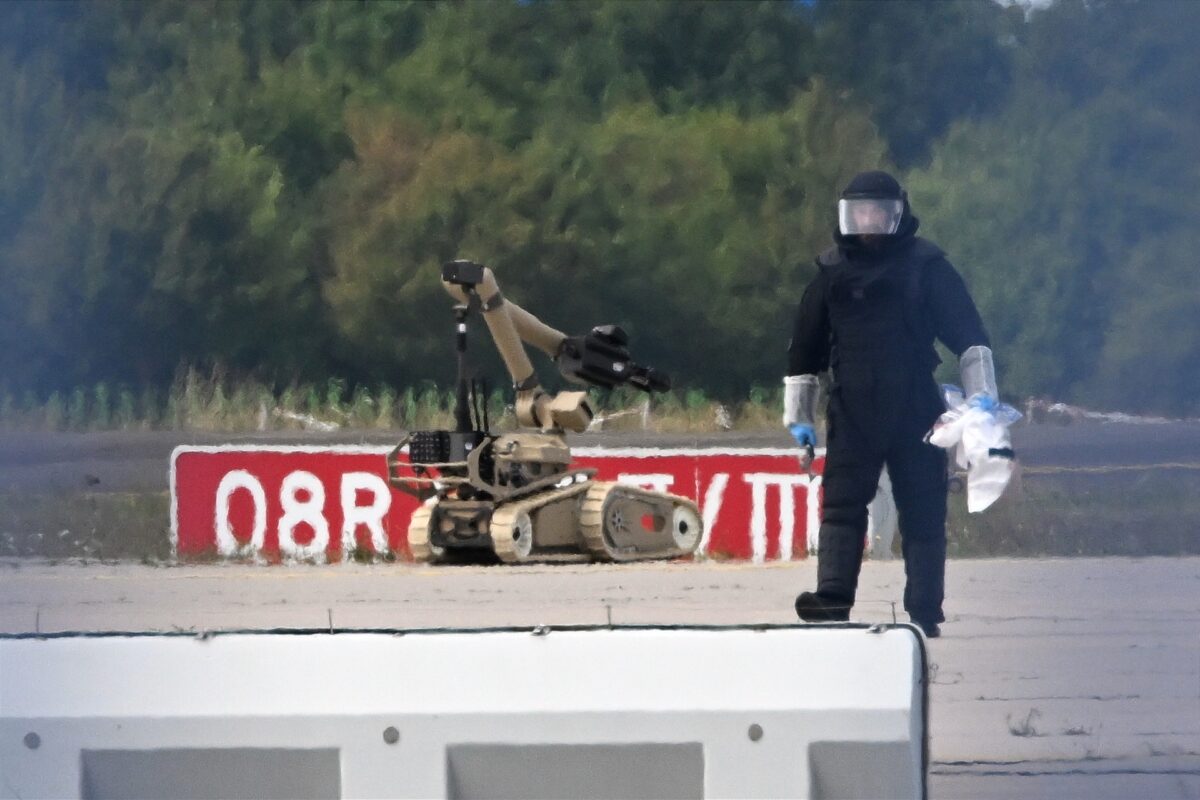

Frankfurt (Germany), Aug. 25 (LaPresse) – The alleged drone attack at Leipzig/Halle Airport may have been more elaborate than has emerged so far. Ten days after the discovery of the first aircraft, investigators found a third drone and around 50 grams of Hexogen, a high-powered military explosive. According to security sources cited by German media outlets Ndr, Wdr and Sueddeutsche Zeitung, the perpetrators may have planned an attack more serious than previously believed. The third drone was found on August 14 in a field in Kabelsketal, in the Saalekreis district of Saxony-Anhalt, close to the western part of the airport. The following day, investigators reportedly found a substance at the site which, according to initial analyses, could be around 50 grams of Hexogen. The Federal Prosecutor’s Office has not confirmed the information. On August 4, a first drone, also equipped with military explosives, had been found in the airport area. According to investigators, it was supposed to hit a Ukrainian Antonov cargo aircraft used to transport military equipment. The attack failed, probably because the detonator did not work, leading to the immediate suspension of air traffic. Shortly afterwards, at around 00:03, a second drone allegedly hit a DHL cargo aircraft. The aircraft, which had to abort its landing in Leipzig due to the airport’s closure, was diverted to Hanover. Damage compatible with a collision was detected on the tailplane. The pilots reportedly saw an object about 30 centimeters in size just seconds before the impact; radar data also reportedly indicated the presence of a small aircraft. The drone has not yet been found and may have been destroyed in the impact. Investigators also found a technical device in nearby Kursdorf that could have been used to control the drone: an antenna and electronic components had been attached to a tree with adhesive tape. Traces of burned ground and metal parts were found in the same area, which could indicate an explosion. On August 11, the engine and a rotor of a drone were also reportedly found. The case is being investigated by criminal police investigators on behalf of Federal Prosecutor General Jens Rommel, who is investigating on suspicion of state terrorism. A DNA trace was also recovered at the site. According to security sources cited by German media, Russian intelligence services could be behind the alleged plan, as part of a possible hybrid attack. Moscow has denied any responsibility. Investigators are following several leads to clarify the dynamics of the operation and identify those responsible.