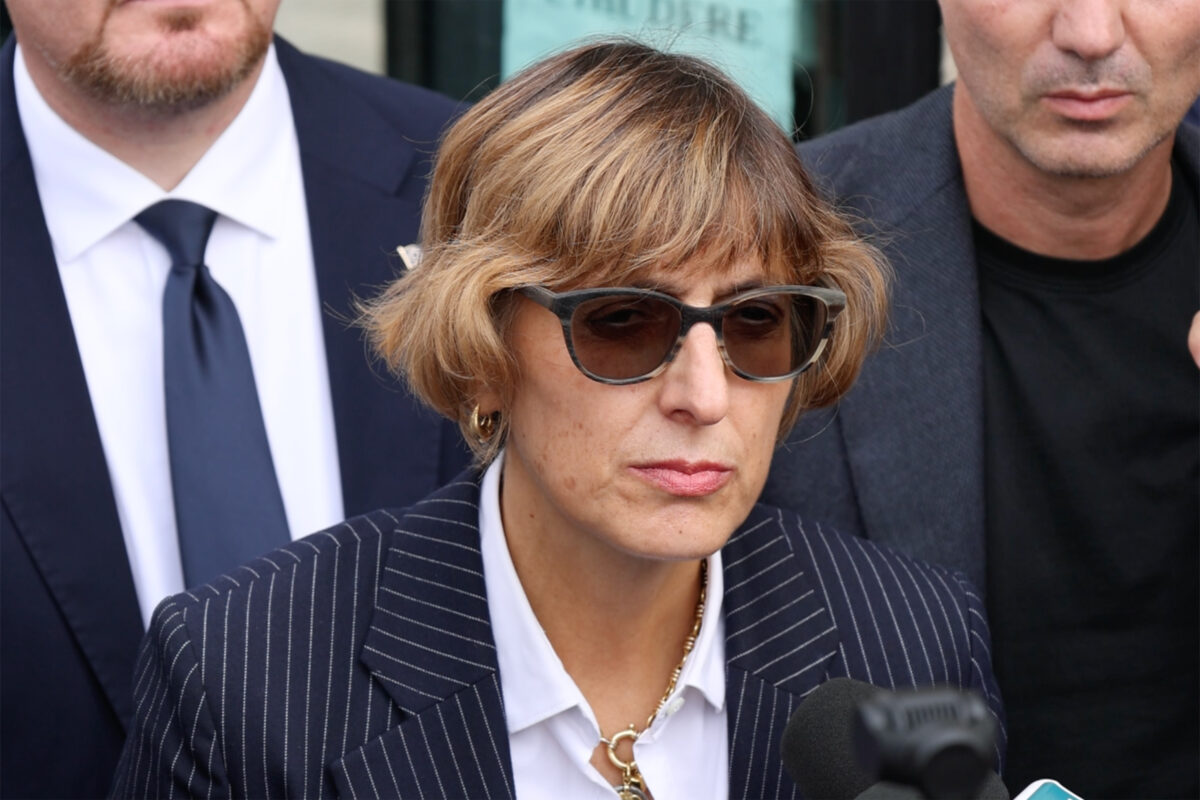
Rome, Apr 28 (LaPresse) – “The European Parliament’s ruling seems to me yet another indication to move forward on the path of passing this law and finding shared agreement on all points.” This was stated by the chair of the Senate Justice Committee Giulia Bongiorno, who, when approached by reporters, added: “My first proposal was on the so-called recognizable consent, then there was the unified text which for now we have set aside, and now there is a new proposal by Unterberger,” she continued. “I honestly believe this is the time to find a shared agreement in which everyone must give up something. We must not forget that the woman’s will will be assessed case by case by the judge, and if we keep wasting time and raising controversies, we will not find an agreement.” “All the laws passed in recent years,” she continued, “have found not only agreement but sometimes unanimity. Let’s not divide ourselves. There will be no winners and no losers, but there will be if we do not pass the law.” “Unanimity had been reached in the Chamber on a text which was later said by experts to lack legal precision,” she concluded. “It was then reiterated in committee that the text could lend itself to misuse. From there the centre-right asked for a different formulation, and the new formulation was not liked by the centre-left. At this point, instead of proceeding by majority, we returned to a committee. In this committee there is a new proposal by Unterberger and my proposal on recognizable consent,” she concluded.
Rome, Apr 28 (LaPresse) – “The European Parliament’s ruling seems to me yet another indication to move forward on the path of passing this law and finding shared agreement on all points.” This was stated by the chair of the Senate Justice Committee Giulia Bongiorno, who, when approached by reporters, added: “My first proposal was on the so-called recognizable consent, then there was the unified text which for now we have set aside, and now there is a new proposal by Unterberger,” she continued. “I honestly believe this is the time to find a shared agreement in which everyone must give up something. We must not forget that the woman’s will will be assessed case by case by the judge, and if we keep wasting time and raising controversies, we will not find an agreement.”
“All the laws passed in recent years,” she continued, “have found not only agreement but sometimes unanimity. Let’s not divide ourselves. There will be no winners and no losers, but there will be if we do not pass the law.” “Unanimity had been reached in the Chamber on a text which was later said by experts to lack legal precision,” she concluded. “It was then reiterated in committee that the text could lend itself to misuse. From there the centre-right asked for a different formulation, and the new formulation was not liked by the centre-left. At this point, instead of proceeding by majority, we returned to a committee. In this committee there is a new proposal by Unterberger and my proposal on recognizable consent,” she concluded.