
Trento, Aug. 2 (LaPresse) – “Recognizing glaciers as common goods means considering them collective assets that are essential for ecological balance, community safety, the regulation of water resources, the protection of biodiversity, landscapes and the rights of future generations. It also means acknowledging that glacial and proglacial areas cannot be governed exclusively according to ownership or market-based principles, but require forms of shared responsibility and management aimed at the general interest. For this reason, today, with the preview of Carovana dei ghiacciai 2026, in addition to calling for European governance for glaciers, we are also asking that glaciers be recognized as common goods to be protected and defended.” Vanda Bonardo, national head of the Alps division of Legambiente and president of Cipra Italia, said this. According to Walter Maggi, president of the Italian Glaciological Foundation, “the situation of Italian glaciers in 2025 confirms an already established trend: almost all of the approximately 900 Alpine glaciers surveyed show negative mass balances, with more than 90% reduced to an area of less than 0.5 square kilometres. Adamello, the largest glacier in the Italian Alps, is the clearest example, with an estimated loss of around 12 million cubic metres of water over the past year. These figures describe not an anomaly, but a structural retreat process linked to ongoing climate warming.” Maria Grazia Cavazza, president of the Central Commission for the Protection of the Mountain Environment of the Italian Alpine Club (CAI), added that “climate change and its effects are increasingly evident for those who spend time in the mountains. The reduction of glacial masses and the degradation of permafrost are causing increased natural instability. Many ecosystems have shifted towards higher altitudes. The balance of the mountain environment that we were accustomed to is in crisis, and we must be aware of this in order to adopt adaptation strategies and change our behaviour. In this regard, the CAI has for several years been committed to information activities and research initiatives in collaboration with universities and research institutes.”
Climate, Legambiente: “Glaciers are a common good to be protected”
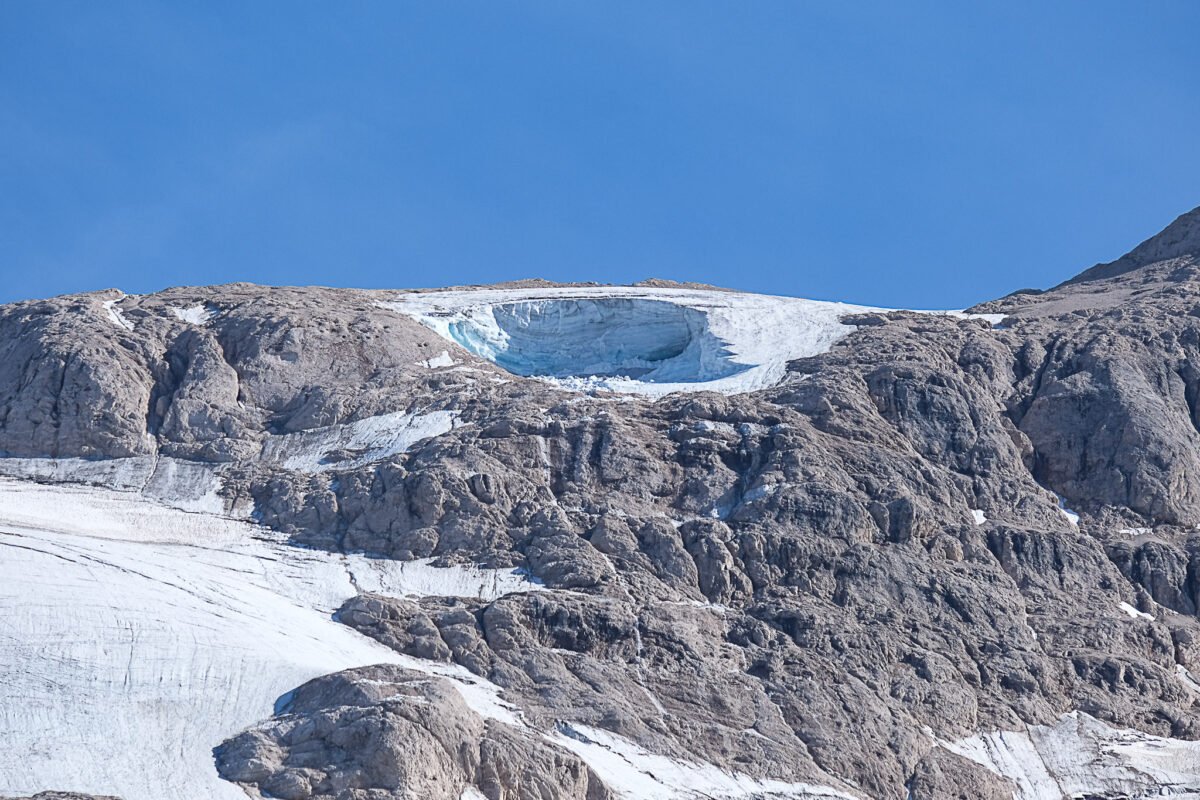

Trento, Aug. 2 (LaPresse) – “Recognizing glaciers as common goods means considering them collective assets that are essential for ecological balance, community safety, the regulation of water resources, the protection of biodiversity, landscapes and the rights of future generations. It also means acknowledging that glacial and proglacial areas cannot be governed exclusively according to ownership or market-based principles, but require forms of shared responsibility and management aimed at the general interest. For this reason, today, with the preview of Carovana dei ghiacciai 2026, in addition to calling for European governance for glaciers, we are also asking that glaciers be recognized as common goods to be protected and defended.” Vanda Bonardo, national head of the Alps division of Legambiente and president of Cipra Italia, said this. According to Walter Maggi, president of the Italian Glaciological Foundation, “the situation of Italian glaciers in 2025 confirms an already established trend: almost all of the approximately 900 Alpine glaciers surveyed show negative mass balances, with more than 90% reduced to an area of less than 0.5 square kilometres. Adamello, the largest glacier in the Italian Alps, is the clearest example, with an estimated loss of around 12 million cubic metres of water over the past year. These figures describe not an anomaly, but a structural retreat process linked to ongoing climate warming.” Maria Grazia Cavazza, president of the Central Commission for the Protection of the Mountain Environment of the Italian Alpine Club (CAI), added that “climate change and its effects are increasingly evident for those who spend time in the mountains. The reduction of glacial masses and the degradation of permafrost are causing increased natural instability. Many ecosystems have shifted towards higher altitudes. The balance of the mountain environment that we were accustomed to is in crisis, and we must be aware of this in order to adopt adaptation strategies and change our behaviour. In this regard, the CAI has for several years been committed to information activities and research initiatives in collaboration with universities and research institutes.”