
Rome, 7 Aug. (LaPresse) – Roberto Saviano’s interview on Rai Radio3 begins with a tribute to Francesco Guccini, drawing on the great Bolognese singer-songwriter’s conviction that songs alone are not enough, that it is “better to do things”. “This sentence encapsulates the very essence of the man that Guccini was. After all, songs, just like books,” reflects Saviano, “were constant attempts – like his novels – to leave a mark, but with a deep sense of unease. In other words, it’s not enough; you don’t become a symbol, you don’t point the way to new horizons, like the old statues of Lenin, simply by writing poetry or literature. Things have to be done, and it is precisely in this melancholy that Guccini leaves his great legacy – that of a man who questioned his own era: disappointed, angry, yet also full of the comfort he offered when he explored emotion in his songs.” “It seems to me,” continues Saviano, “that the humanity he depicted has now vanished, and in this sense I myself sometimes even feel deceived by Guccini.” In his contribution to the programme *Tutta la città ne parla* on Rai Radio 3, Saviano also dwells on the polarisation of politics: the far right, which, according to Saviano, “are winning, but not convincing. And they’re winning because they’ve been able to read the signs of the times.” And the left, which no longer knows how to do so: “We no longer know how to speak to the majority of people, and when we do, we risk coming across as inquisitorial. In part, I feel responsible too. This wasn’t what socialism was supposed to be.”
Guccini’s death. Saviano: “A man who questioned his times”
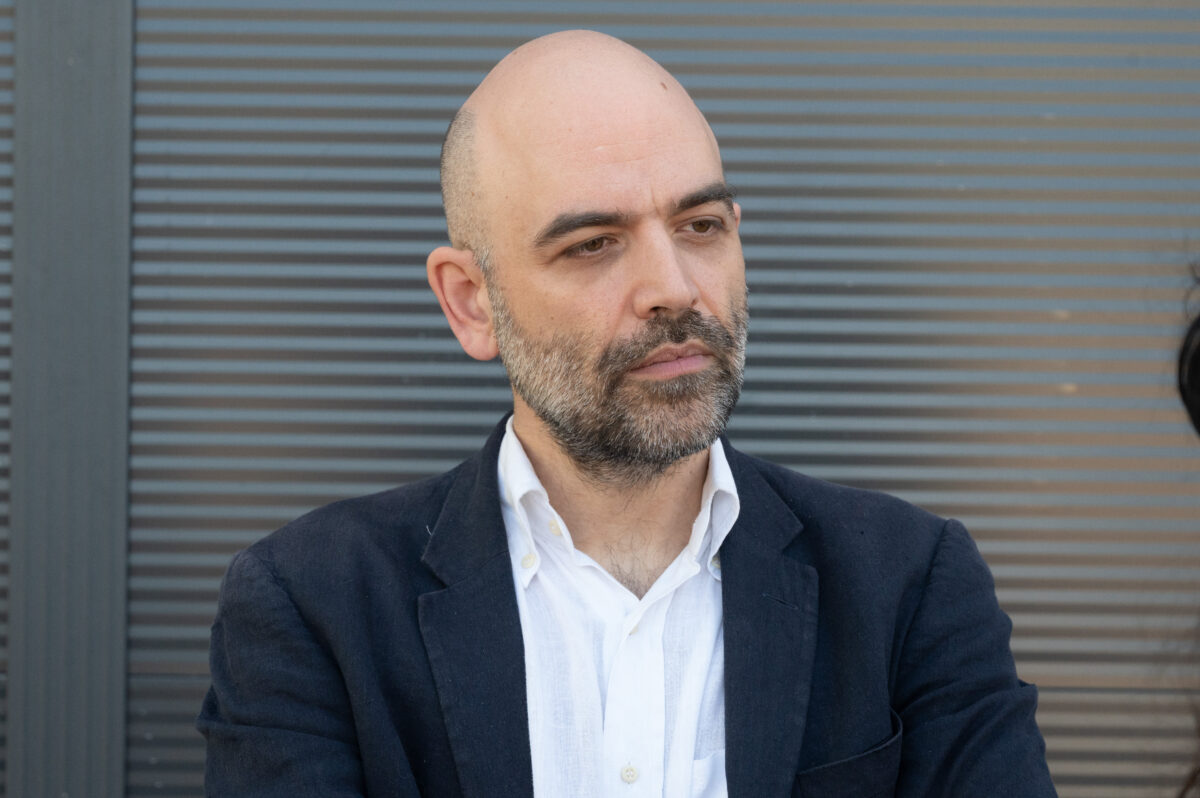

Rome, 7 Aug. (LaPresse) – Roberto Saviano’s interview on Rai Radio3 begins with a tribute to Francesco Guccini, drawing on the great Bolognese singer-songwriter’s conviction that songs alone are not enough, that it is “better to do things”. “This sentence encapsulates the very essence of the man that Guccini was. After all, songs, just like books,” reflects Saviano, “were constant attempts – like his novels – to leave a mark, but with a deep sense of unease. In other words, it’s not enough; you don’t become a symbol, you don’t point the way to new horizons, like the old statues of Lenin, simply by writing poetry or literature. Things have to be done, and it is precisely in this melancholy that Guccini leaves his great legacy – that of a man who questioned his own era: disappointed, angry, yet also full of the comfort he offered when he explored emotion in his songs.” “It seems to me,” continues Saviano, “that the humanity he depicted has now vanished, and in this sense I myself sometimes even feel deceived by Guccini.” In his contribution to the programme *Tutta la città ne parla* on Rai Radio 3, Saviano also dwells on the polarisation of politics: the far right, which, according to Saviano, “are winning, but not convincing. And they’re winning because they’ve been able to read the signs of the times.” And the left, which no longer knows how to do so: “We no longer know how to speak to the majority of people, and when we do, we risk coming across as inquisitorial. In part, I feel responsible too. This wasn’t what socialism was supposed to be.”