
Rome, 20 Oct. (LaPresse) – “There is a great deal of talk today about bank profits; the 50 billion in profits was the figure known last year, on the basis of which a three-year agreement was drawn up: what isn’t being said is that, against 50 billion in profits, the State will collect 25 billion in taxes.” So said Intesa’s CEO, Carlo Messina, at the Coldiretti Forum currently taking place in Rome. “If there are profits, it is because taxes have been paid; 25 billion in public spending will be financed by the banks,” Messina pointed out. “For example, public order costs 40 billion, 25 billion of which is paid by the banks. I would like it if, when people talk about 50 billion in profits, they also mentioned that this represents a significant contribution to public spending.” “If, objectively speaking, we are in a difficult situation,” he continued, “it is not as though there is only one sector that has to pay – especially one with which you have already reached an agreement and are now reneging on – and now you want to stigmatise us by suggesting we do not wish to contribute to the State. These matters must be handled fairly and in a manner consistent with the agreements reached.”
Budget, Messina: “50 billion in bank profits? Nobody mentions that the State collects 25 billion in tax”
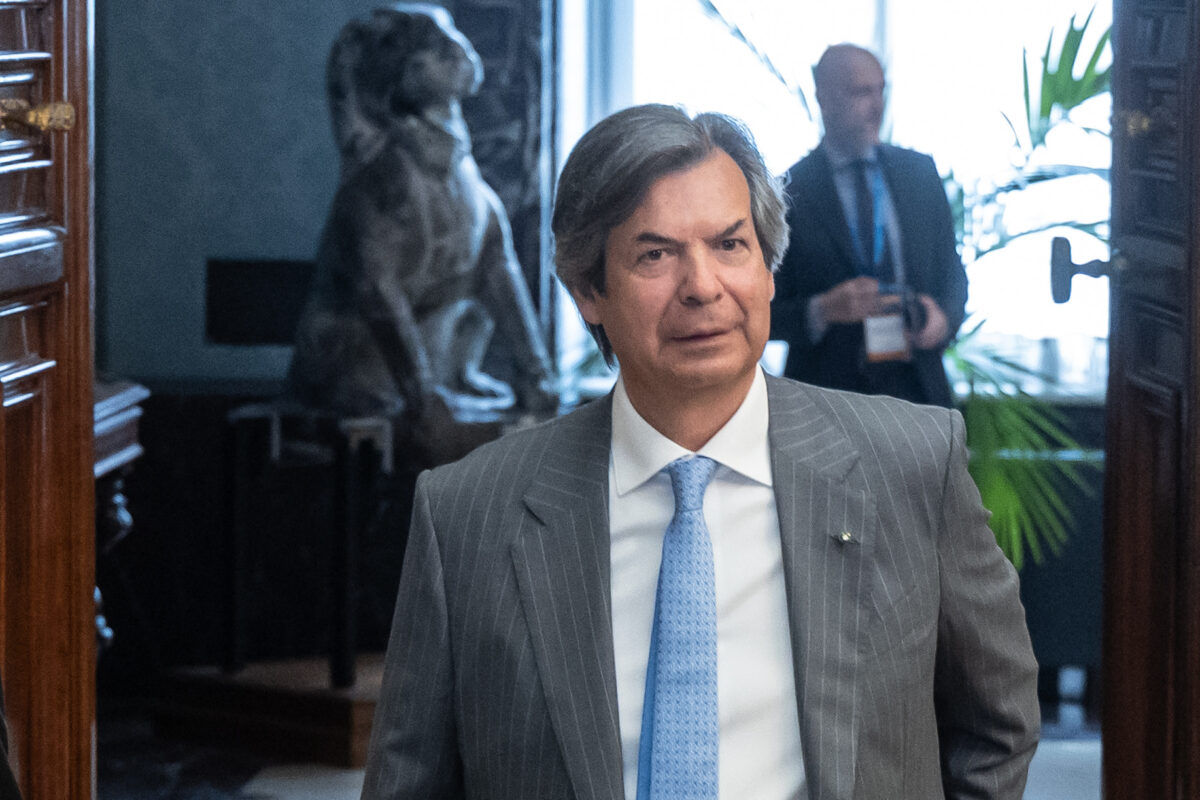

Rome, 20 Oct. (LaPresse) – “There is a great deal of talk today about bank profits; the 50 billion in profits was the figure known last year, on the basis of which a three-year agreement was drawn up: what isn’t being said is that, against 50 billion in profits, the State will collect 25 billion in taxes.” So said Intesa’s CEO, Carlo Messina, at the Coldiretti Forum currently taking place in Rome. “If there are profits, it is because taxes have been paid; 25 billion in public spending will be financed by the banks,” Messina pointed out. “For example, public order costs 40 billion, 25 billion of which is paid by the banks. I would like it if, when people talk about 50 billion in profits, they also mentioned that this represents a significant contribution to public spending.” “If, objectively speaking, we are in a difficult situation,” he continued, “it is not as though there is only one sector that has to pay – especially one with which you have already reached an agreement and are now reneging on – and now you want to stigmatise us by suggesting we do not wish to contribute to the State. These matters must be handled fairly and in a manner consistent with the agreements reached.”